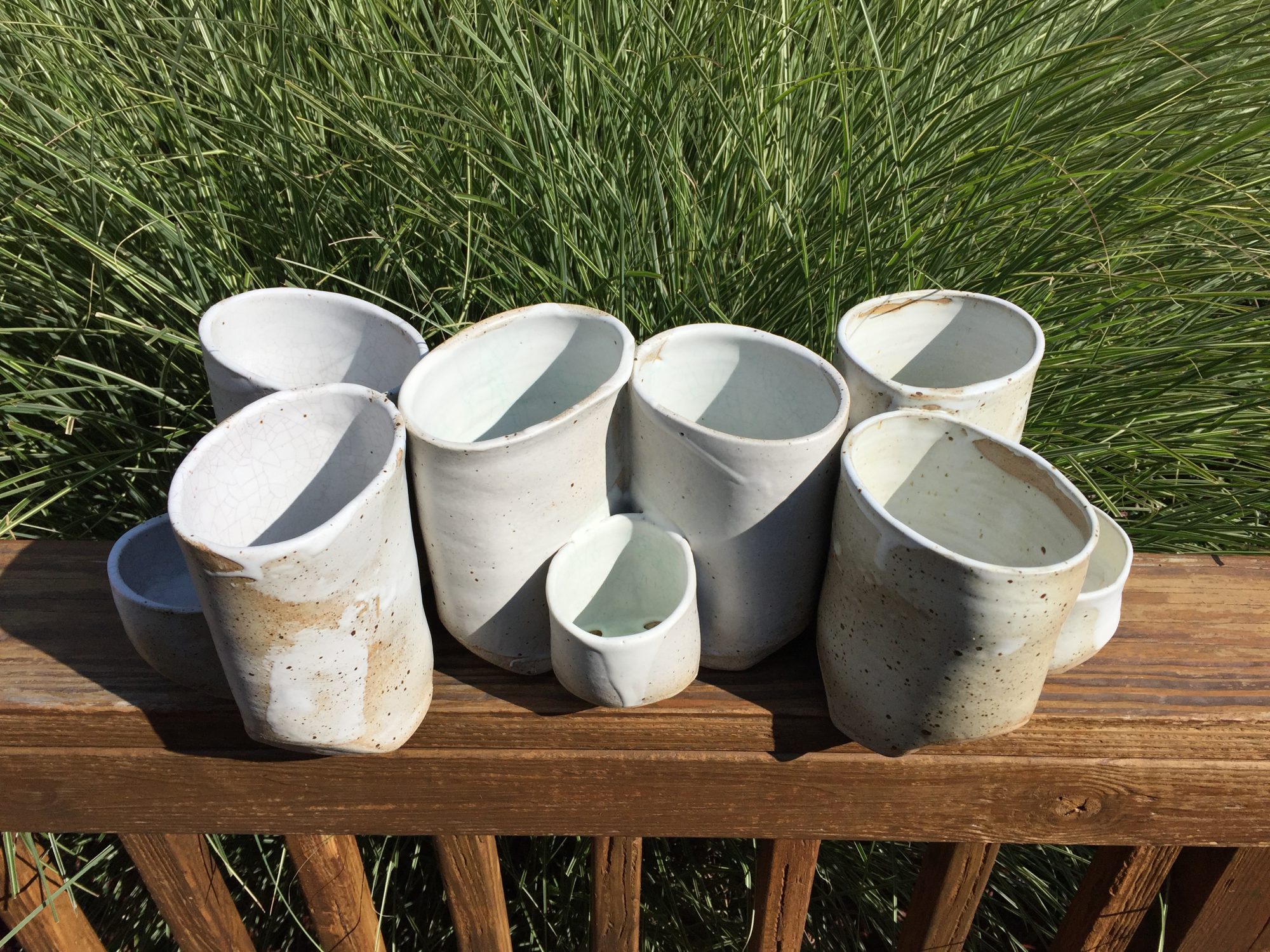
Ceramics
Looking at an object such as the spokes of a bike wheel, the rungs of a metal fence or the knotted threads of a crocheted scarf, I am most attracted to the lines which are created, the tactile elements and the movement of materials: up and down, in and out, side to side. The object’s essential patterns and texture take form because of the basic construction of the object. A continued question in the making of ceramic ware is usually concerning the relationship between form and function. The modernist ideals that were impart headed by Louis Sullivan’s phrase, “…form ever follows function”, and the influence of the modern industrial era has led to clean cut and stream lined objects. When, I begin to play with a designed object’s purpose, its function as a cup or a bowl, while incorporating sculptural elements, I must ask if these new elements take away from the designed object’s function and practicality? Is it true to deduce that ceramic ware becomes worthless when sculptural elements begin to disturb its function? With my next project I would like to experiment with the purpose of ceramic ware through deconstructing the thrown object and adding new materials.
For inspiration, I pull references from photographs I’ve taken of different historical buildings, fences, mosaics, textiles and furniture. The photograph of a three-dimensional object then becomes a template for patterns and textures in ceramic ware. I am pulled towards the beautiful artistry of textiles and basket weaving, stained glass windows and wood panels on church doors. The elements of their design are attractive, but the craftsmanship and construction of an object is always something that interests me more. I want to understand better, how the object is made and why, structurally, it continues to be formed in a similar process throughout time. How can an artist test the structure of a designed object in an artful way? Work I am currently drawn to is Jennifer McCurdy. Her porcelain thrown objects are cut and pierced into spiral forms that resemble coral, ribbon and shells. This deconstructs the purpose of the ceramic vessel and creates a dialog between its structure and function.
My next body of work begins to take functional ceramic ware and experiment with the structure of the thrown object through the introduction of new materials into the form. I will use the methods of throwing, hand building and plaster casting to form the ceramic objects. Then pierce, carve and cut the objects in the greenware stage to incorporate new materials to the ceramic ware in the after fired stages. I will introduce wire, fabric, string, glass, or wood as well as experiment with the introduction of other materials to the already fired and glazed clay objects. I will test the practical uses of fired ceramic ware by introducing new materials to its composition and form. By deconstructing functional ceramic ware and adding new materials, I will ask users to pay attention to the object’s function. These new forms will open a discussion on the functional and sculptural ceramic object and the use of foreign materials in ceramic ware.
Drawing/Sculptural
I will take figural drawings and associate them with the designed object. The project will range in the experimentation of materials and processes. I will draw figures on top of photographs I’ve taken, integrate figures into the line work of buildings, fences, bridges and designed objects. Or create sculptures out of found materials and introduce the drawn figure into the objects themselves. The motivation of the next project is to find an interconnectivity between the body and the object. It is not only what an object may resemble in a literal sense, but questioning how our bodies can be paralleled to everyday designed objects of the past and present. Is there a different relationship with our bodies between machine made and manmade objects? Is there an association between female and male forms within art objects? As an artist, also interested in the area of crafts such as ceramics, woodworking and knitting, I enjoy questioning to what extent designed and craft objects are integrated into the art world. By developing the relationship of the art object to the body I can create a dialog of the greater symbolism we give to designed objects. I will open a discussion of the connotation given to certain types of designed objects, their uses and the relationships to users as well as the greater relationship to their function as a craft or an art object.

